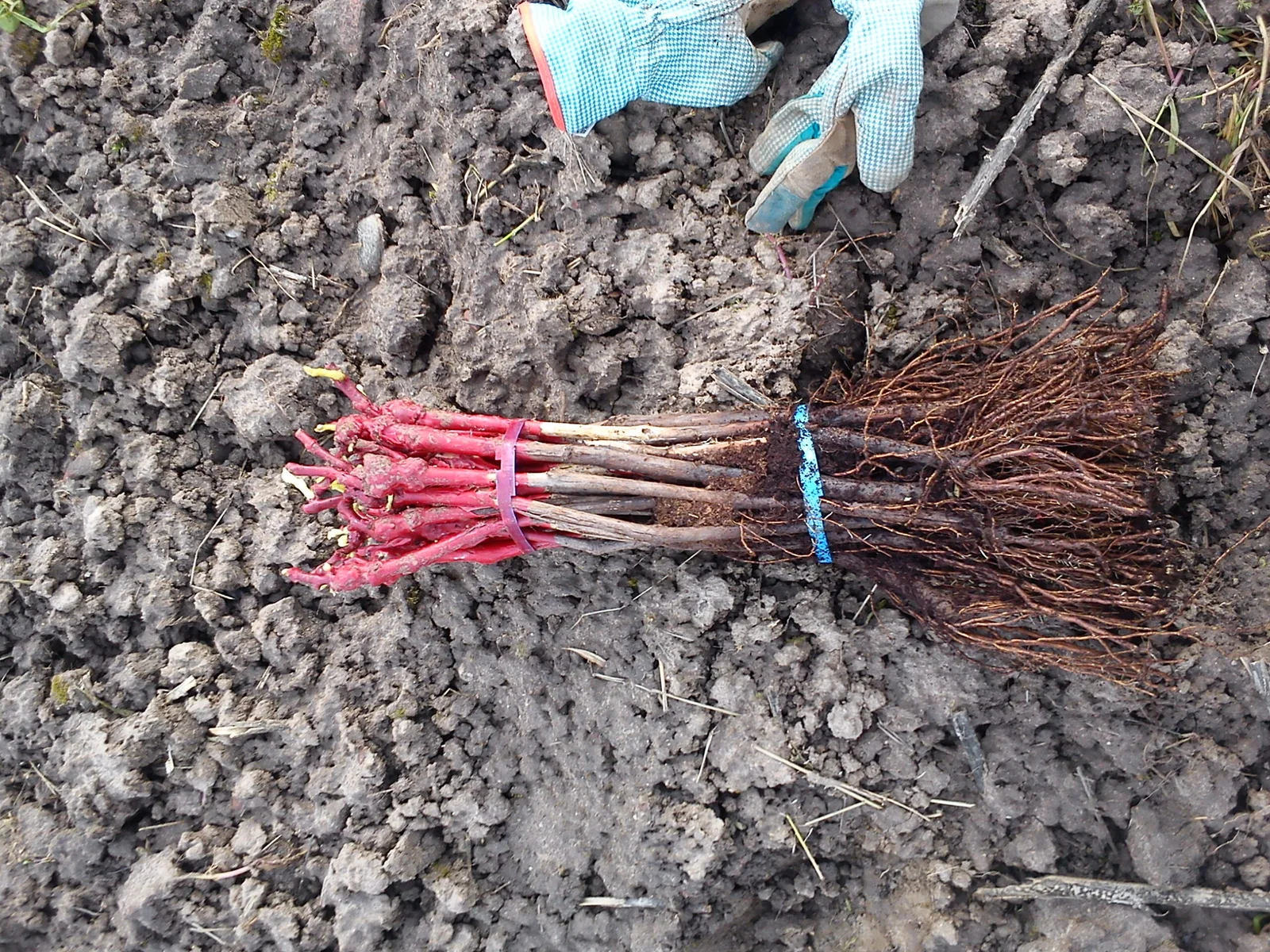
The Directorates for Rural Economy and Veterinary Affairs grant the holder of a “planting right” before planting the new vineyard and for an equivalent area, an “authorisation to establish a vineyard and supply antiphylloxeric vine cuttings”, taking into account the CaCo3 content of the soil and other technical characteristics. The holder of a planting right, before planting the new vineyard, should comply with the following requirements:
a) The propagating material used must comply with the terms and conditions laid down in Joint Ministerial Decision 258676/29−09−2003 "Technical Regulation on the control and certification of material for the vegetative propagation of the vine" (Government Gazette 1517/B'/2003) as in force and as amended and supplemented by Joint Ministerial Decision 282465/18−08−2006 (Government Gazette 1412/B'/2006), in compliance with Council Directive 68/193/EEC on the marketing of material for the vegetative propagation of the vine.
b) It is mandatory to use antiphylloxeric vine rootstocks for the whole territory, except for the islands of Thira and Thirasia, where due to specific soil and climatic conditions phylloxer cannot develop, on which self-rooted rootstocks can be used.
c) Planting is carried out with the recommended and permitted varieties in accordance with Decision No 814/16068/05−02−2014 (Government Gazette, Series II, No 225) of the Minister for Rural Development and Food "Classification of wine grape varieties and raisin varieties", as in force each time.
d) The establishment of the new vine plantation is carried out with a minimum number of vines of 250 per acre and for the Aegean islands 200 vines per acre.
e) To have, as appropriate, the following title deeds:
(i)For privately owned parcels, producers are required to hold title deeds as follows:
- Purchase contracts lawfully transcribed;
- Acceptance of inheritance,
- Proof of donation of real estate,
- Acquisition by ratification,
- By judicial decision conferring ownership,
- Certificate of succession.
In exceptional cases where it is impossible for the owner to produce any of the above titles of ownership, the owner may submit a copy of the E9 form of his tax return for the immediately preceding financial year, in which the specific parcel must appear to be declared, as well as a solemn declaration under Law 1599/1986, stating that the information referred to therein is true.
ii). For non-proprietary parcels, producers are required to have notarial documents, private lease agreements (rental agreements) or loan agreements, which must:
- they must indicate the VAT number of both the owner and the tenant,
- indicate in detail the details of the agricultural parcels (location, area, cartographic code where available, etc.) and the time period of the lease,
- have authentication of the signature of the contracting parties (concerns private lease agreements that are not considered by the competent tax office and loans).
For non-proprietary parcels, the lease period should be more than seven (7) years. Holding documents for non-privately owned parcels, which were signed in the past, are accepted, if the duration of legal possession they indicate in relation to the date of their signature, also covers the above period of more than seven (7) years.
If the producer does not have other parcels in his possession and wishes to plant a vineyard whose products are intended exclusively for family consumption, the competent Directorate for Rural Economy and Veterinary Medicine/Agricultural Economy shall grant only an ‘authorisation to establish a vineyard and supply antiphylloxeric vine cuttings’ for an area not exceeding one hectare.
If a producer who owns a parcel whose products are intended exclusively for family consumption wishes to increase his wine-growing holding by producing products for marketing, he must inform the competent DAOK accordingly so that the planting rights he will acquire either from the National Reserve or from a transfer include the area of the parcel intended for family consumption.
Any case of planting a vineyard shall be declared directly to the competent Directorate for Rural Economy and Veterinary Medicine/Agricultural Economy, which shall certify the planting and ensure that it is entered in the Register, in accordance with the instructions of the Directorate for the Management of Registers. The producer undertakes to indicate the exact location and extent of his vineyard parcels. A parcel means the contiguous area of the parcel covered by vine plants and is not always the same as the area of the parcel. · Any feature within the parcel (e.g. road, building, water basin, tree rows) ̇ as well as areas within the parcel without vine plants above 100 m2 must be excluded from the area. Individual trees could be counted as vineyard area provided that
(1) are not subsidized,
(2) allow production as on a parcel without trees and
(3) do not exceed 40 trees per hectare in density.
During the on-the-spot check, the on-the-spot check report of a wine-growing declaration is completed and the records in the vineyard register are confirmed. Positioning instruments using satellites (GPS) are used to identify and obtain the coordinates of the vertices of the parcel. When working as an office using the application for keeping the registers, the results are entered and integrated into the Geographical Information System for the Olive Sector and the Vineyard Register (S.G.P. E.T. and AM) in the alphanumeric and cartographic database of the Vineyard Register.
Source: Ministerial Decision 3323/99635 Production potential of wine grape varieties. * Government Gazette, Series II, No 2176/07.08.2014