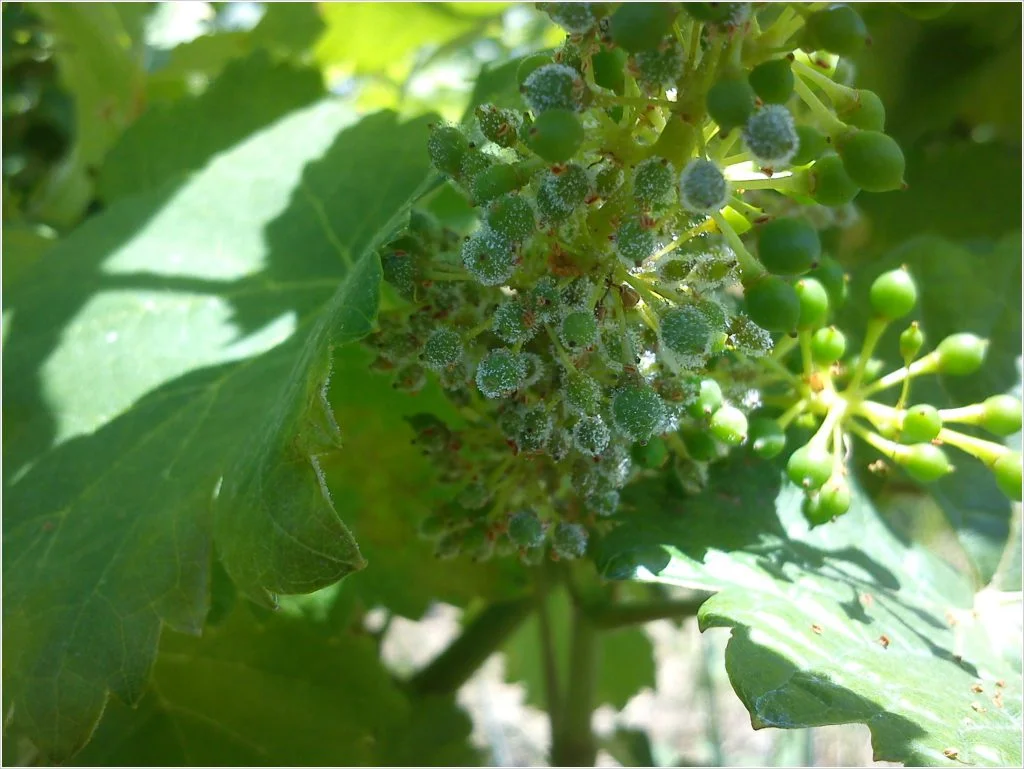
Downy mildew is the most serious disease in , vine, especially in areas with warm and humid climates. The first symptoms of the disease in varieties of the European vine (Vitis vinifera) were recognized in the Bordeaux region around 1878.
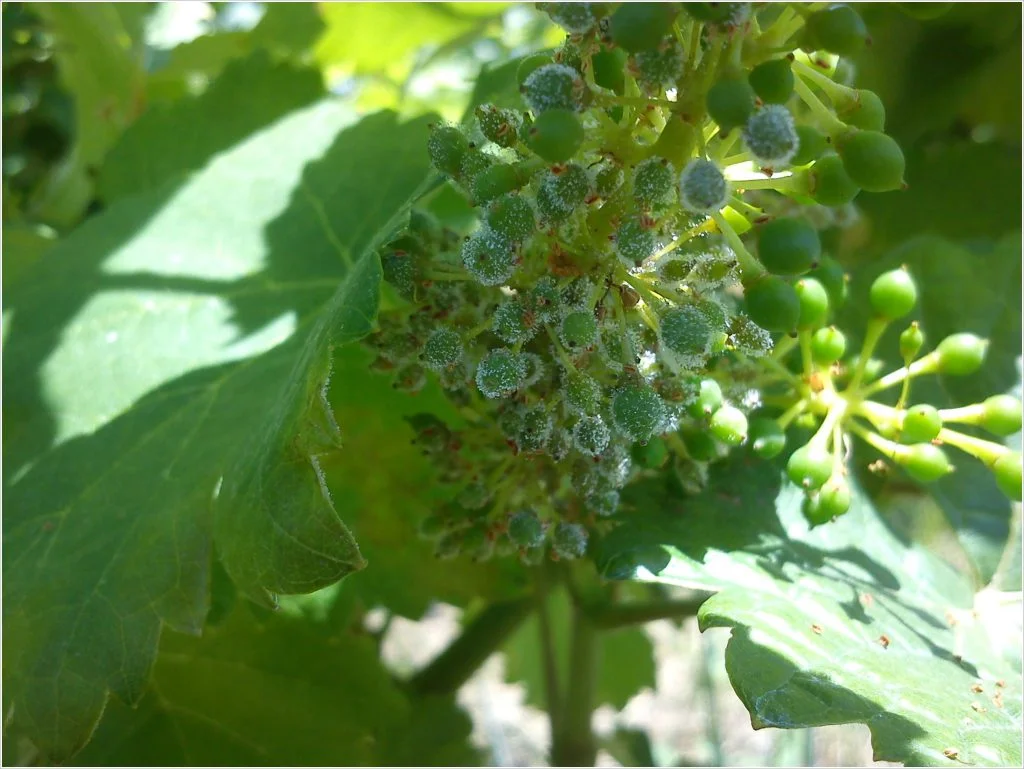
Today the disease is endemic in all wine-producing regions of the world with a warm and humid climate during the period of vegetative growth of the vine. The absence of rain in spring and summer in some areas limits the spread of the disease (eg. Australia , California , Chile).
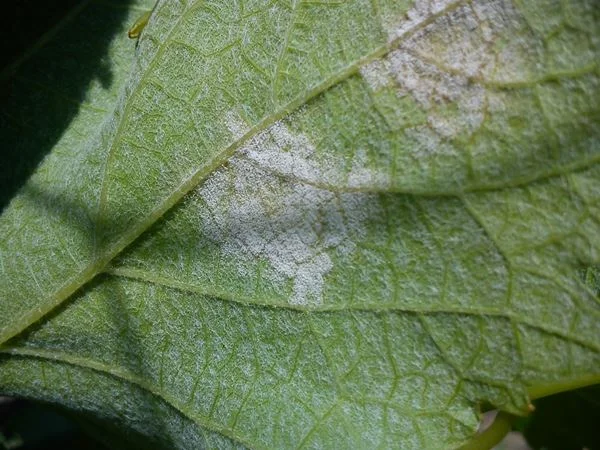
The disease affects all green parts of the plant, especially , leaves, inflorescences and young grapes.
The pathogen belongs to the Oomycetes , and according to the recent classification is a member of the family Peronsporomycetes (Dick 2002). This family is different from that of fungi (Mycota) and is part of the Chromista , a kingdom which includes heterogeneous microorganisms.
In cases where the infestation with the disease is severe , the leaves fall prematurely , the production and sugar content of the grape is reduced , while the grapes are at risk of sunburn.
Severe , infestations especially during the flowering period that are not treated , can lead to a total loss of production.
In addition, early defoliation due to severe infestations of , downy mildew puts the next year's , production at risk as plants fail to form sufficient reserves.
Grape Downy Mildew | Plasmopara viticola
All varieties of Vitis vinifera are susceptible to downy mildew infestation. Vitis vinifera , hybrids Vitis aestivalis and Vitis labrusca are less sensitive , while Vitis rupestris , Vitis cordifolia and Vitis rodundifolia are generally resistant
Downy mildew is a mandatory parasite. It needs living tissues to grow. So it can grow on all green parts of the plant.
Oospores (brooding organs) form late summer and autumn on the affected , leaves on the vine or rails. With autumn defoliation they drift into , soil where they overwinter on infected leaves. There they can remain from 3 to 5 years (many times up to 10 years).
Oospores are the intrinsic reproductive organs of downy mildew. Their durable walls make them less susceptible to fungicides and extreme weather conditions than zoospores and spores.
At least 10 mm of rain (and/or irrigation ) , 10 °C or more , for at least 24 hours favor the primary infections of the disease.
These conditions do not always ensure the progression of , disease, but they should mobilize the wine producers.
In particular, in order for oospores to germinate, they require:
- Soil should be moist for at least 16 hours. This is usually achieved by 3-5mm of rain (and/or irrigation).
- The temperature should at the same time be maintained at around 10 °C.
Under these conditions, the oospores germinate and release , zoospores, which with raindrops or irrigation are transported to the lower parts of the crown of the plant and are responsible for primary infections. Another 3-5 mm of rainfall (and/or ) irrigation) is also required at this stage both for the transfer from soil to plant and for sufficient wetting of the lower surface of the sexes, which is a prerequisite for infection.
The foliage should remain moist for at least 2-3 hours at 20 oC (or 4-5 hours at 10 oC) for the spores to complete the primary infections.
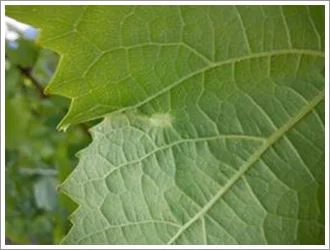
Zoospores that settle on the lower surface of the leaf form the mycelium of the fungus which grows inside the leaf causing the known oily spots. These spots usually appear 5 to 17 days (most often 5 to 10 days) after infection. The appearance of spots is faster when the weather is warm (18-27 oC). At higher or lower temperatures the incubation period is longer.
Primary infections are usually at low , levels with 1-3 spots appearing on every 50 m of planting line, but they are quite difficult to detect. These primary infections alone cannot cause serious production losses. But they are very important for the progression of the disease as , when favorable conditions prevail allow the disease to spread too quickly.
Secondary infections from leaves to , leaves , vines , inflorescences and grapes require at least 98% Relative humidity , 13 °C or more , at least 4 hours darkness and leaf moisture in the form of a drop for at least 2-3 hours.
An essential condition to have secondary infections is the presence of oily spots.
These spots and other infected tissues produce spores during hot and wet nights. For the production of the seedlings, at least 4 hours of darkness are required with the temperature being at 13 °C or more and the humidity at 68 °C.% or more.
The foliage must also be moist for at least 2-3 hours from the moment the seedlings are produced. This can happen with , rain with excessive irrigation and occasionally when conditions of very high relative humidity prevail.
Secondary infections can occur at any time during the vegetative period when there are oily spots and the conditions prevailing are favorable for the progression of the disease.
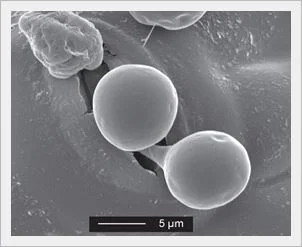
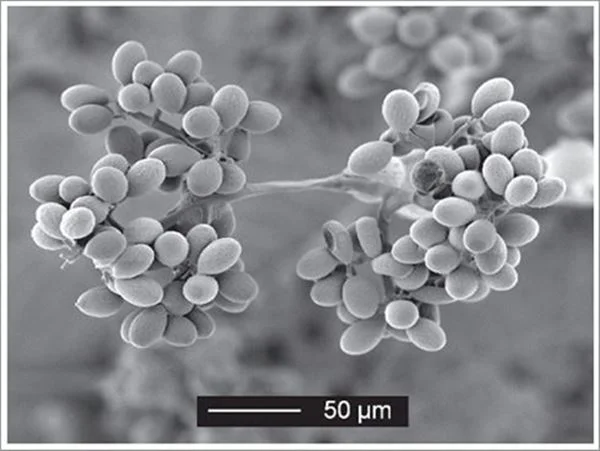
Spores are the rude form of downy mildew. They occur in spoiovascular veins which have a tree-like form.
One to ten zoospores can be produced from each sporangio. Zoospores can move in water but are mainly dispersed by wind and raindrops.
Primary infections are the beginning of the biological cycle of the disease and result in the appearance of oily spots.
The spores produced in these spots can disperse with wind or rain and cause infections in new locations.
Secondary infections are the main source for the spread of the disease.
Monitoring weather conditions conducive to primary and secondary infections is a prerequisite for effective disease management.
Automatic weather stations are used to monitor and predict weather conditions. * These stations collect information about , temperature, , rain height, , surface humidity, relative humidity and other meteorological parameters depending on their equipment.
These meteorological data are used by disease progression prediction software developed by , and provide valuable information about the risk of developing primary , secondary infections and ultimately the progression of the disease.
Alternatively , using a minimum/maximum temperature thermometer and measuring rainfall determine when conditions favorable for the progression of the disease prevail.
The monitoring of the vineyard is necessary to detect any primary contaminations in a timely manner. · Frequent visits to the vineyard are necessary , especially when conditions are favorable for the development of the disease.
Cultivation and chemical control methods are used for protection. Several groups of plant protection products are authorised and used to protect the vine from downy mildew. It is important when applying plant protection products to alternate products of different groups in order not to develop resistance of the fungus.
Meet our wines


Sources:
The life-cycle of Plasmopara viticola, cause of downy mildew of vine , Mycologist Volume 14 , Part 4 , November 2000.
Downy Mildew of grape, report on PLANT DISEASE RPD No. 705 , March 2004 DEPARTMENT OF CROP SCIENCES UNIVERSITY OF ILLINOIS AT URBANA-CHAMPAIGN.
Downy Mildew of Grape HYG-3013-08 Fact sheet Agriculture and Natural Resources 2008, The Ohio State University.
Downy Mildew of Grape Plant Pathology Fact Sheet University of Kentucky – College of Agriculture.
Chapter 4 Fungi of Grapes , Hanns-Heinz Kassemeyer and Beate Berkelmann-Löhnertz H. König et al. (eds.), Biology of Microorganisms on Grapes, in Must and in Wine, © Springer-Verlag Berlin Heidelberg 2009 (photo)