· A team of Australian researchers managed to isolate special strains of , yeast which produced lower levels of alcohol in the wine while maintaining its quality.
← In the last 10-15 years , the alcoholic strength of the wines produced has risen from 11-12.5% at 15% . This fact was considered by some wine lovers to alter the organoleptic characteristics and character of some wines. · This, combined with the health issues related to alcohol consumption but also for economic reasons related to higher , taxation, cultivated the idea of trying to make wines with a lower alcohol content.
· The research focused on attempting to systematically evaluate non-Shacharomyces , yeast strains as a means to reduce alcohol content.
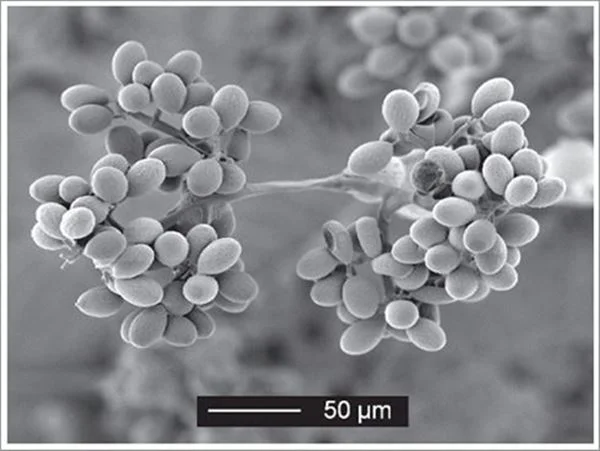
· 50 different isolates from 40 species and 24 genera of , yeasts were evaluated for their potential to produce low-alcohol wine. · The strain Metschnikowia pulcherrima AWRI1149 , stood out during experiments carried out on sweets of the Chardonnay and Syrah varieties.
* When this strain, distinguished by a lower growth rate , consumed 50% · Of the available , sugars, musts were also vaccinated with Shacharomyces cerevisiae , strains in order to complete alcoholic fermentation.
This successive vaccination achieved a reduction in alcoholic strength from 15% to 13,4% * , in the case of Syrah. The results were similar in the case of Chardonnay. · In controls in which the evaluated , strains were not used, no reduction in alcoholic strength was observed.
· Previous research on the influence of non-Shacharomyces , yeasts on , alcoholic fermentation has focused on a limited number of species and the compounds that produce them with a negative effect on the organoleptic characteristics and quality of , wine without assessing their effect on the level of alcohol content.
Source: www.infowine.com